• Úvod
  • Home
  • News
  • Stories
  • Two farmers in Zambia’s Western Province thrive despite drought, thanks to Caritas Czech Republic

Two farmers in Zambia’s Western Province thrive despite drought, thanks to Caritas Czech Republic

April 8, 2025 – While many farmers across Zambia’s Western Province continue to face the harsh impacts of climate change and recurring droughts, some have managed to stand out—thanks to the practical, farmer-focused training and support provided by Caritas Czech Republic. We have trained 40,000 smallholder farmers across six districts in Western Province. Among them were Alick and Rueben, two dedicated farmers whose stories prove that with the right knowledge and tools, smallholder farming can still thrive—even in the face of adversity.

Alick a farmer in Zambia

Alick: A Champion of post-harvest handling

Alick has been farming since 1995 in Mulobezi District, one of the regions most affected by poor rainfall and degraded soils. Despite these challenges, Alick successfully harvested a significant quantity of maize last season, which he used to feed his family.

The key to his success is improved post-harvest handling and storage techniques, which he learned through Caritas Czech Republic’s farmer training sessions.

“Before the training, I used to lose a lot of grain due to poor storage. Now, I know how to properly dry and store my maize. It has made a big difference in how long my food lasts and the quality of what we eat,” Alick says proudly.
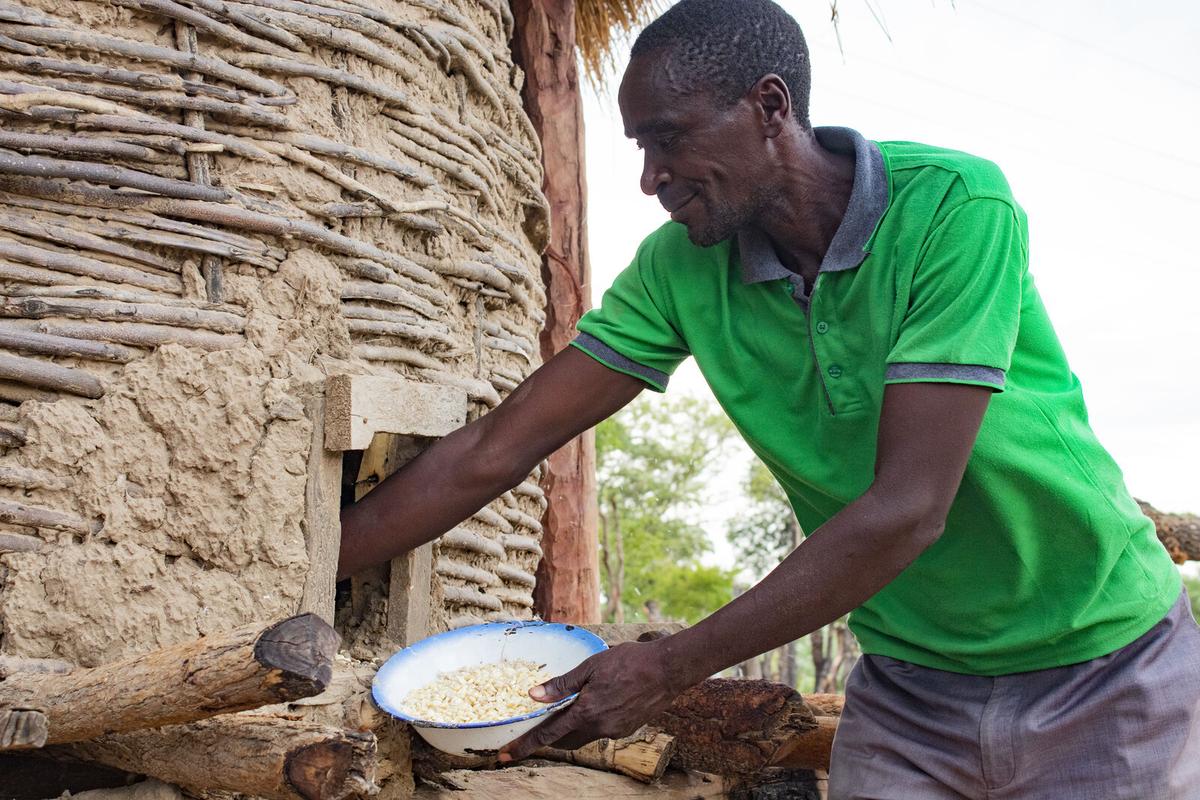
Alick attending to his maize storage

Beyond post-harvest handling, Alick also gained valuable knowledge in conservation farming, the benefits of crop rotation, and the dangers of deforestation—practices that have helped him improve both his yields and his land’s long-term health.

Rueben: Turning Passion Into Productivity

 In Senanga District, Rueben has been farming since 1998. For him, farming is more than a livelihood—it is a way of life.

“Farming has always been how I provide for my family. But what I’ve learnt through the project has taken me to another level,” Rueben shares.

During the last farming season, Rueben planted three hectares of maize, using water from a nearby river to irrigate his crops. He expects a promising harvest despite the prolonged dry spells that affected many in the region. Thanks to the training he received from Caritas Czech Republic, Rueben is now more informed about seed selection and planting techniques suited for the region’s climate.

Rueben a farmer in Zambia

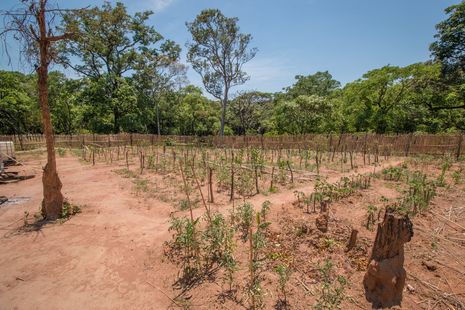
Rueben has also diversified his income by growing vegetables. He now owns a flourishing vegetable garden and has become a well-known vendor in his community, selling fresh produce and encouraging others to follow suit.

Caritas Czech Republic in Zambia: A Legacy of Resilience

Through its climate resilience initiatives, Caritas Czech Republic has not only equipped farmers with practical skills but has also inspired a renewed sense of hope among communities in Western Province. From conservation farming and crop rotation to proper post-harvest handling and access to weather-based insurance, the knowledge shared continues to bear fruit. Farmers like Alick and Rueben are living proof that with targeted support and the right partnerships, rural livelihoods can be strengthened, and local solutions can lead the fight against climate change.

We supported farmers in Zambia as part of the recently concluded climate resilience project carried out in partnership with the Czech Ministry of Foreign Affairs and the World Food Programme. We can also help thanks to the support of our donors.

 

Související články

5 ways Caritas Czech Republic protects the environment
– Humanitární pomoc a rozvojová spolupráce Charity ČR
–

At Caritas Czech Republic, we care about our planet. That is why we help protect it in several countries around the world. In Iraq and Zambia, we support farmers in adapting to climate change so that they can continue to grow and harvest successfully. In Moldova and Georgia, we are introducing the benefits of composting, and in Mongolia we are helping to prevent plastic waste from flooding the beautiful countryside. What else does Caritas Czech Republic do to protect the environment?

How Caritas Czech Republic supports farmers in the Mayukwayukwa refugee settlement in Zambia Farmers in Mayukwayukwa
News – CCR-Zambia

How Caritas Czech Republic supports farmers in the Mayukwayukwa refugee settlement in Zambia

–

Agriculture drives the economy in Zambia and is the main source of income for most of the population, including refugees.  Caritas Czech Republic has contributed to the agriculture sector over the years by supporting farmers in different parts of the country with agriculture knowledge, farming inputs and start-up capital.

How Caritas Czech Republic is Supporting the Development of Value Chains in Western Zambia Mr Mushaukwa Bravo Kabombo, a beneficiary of the value chains project
News – CCR-Zambia

How Caritas Czech Republic is Supporting the Development of Value Chains in Western Zambia

–

In a quest to radically change the face of local businesses for struggling small-holder farmers in Western Province, one of the least developed regions of Zambia, Caritas Czech Republic has been working with local agri-business enthusiasts dedicated to fighting the odds and increasing agricultural productivity and value addition through innovative approaches. 

The project, funded by Czech Development Agency and supported by the Zambian government as well as Czech and Zambian universities, specifically focuses on mango, cassava and organic fertilizer value chains. So far, the project has supported over 180 smallholder farmers involved in agriculture production and helped five local visionaries build brand new processing plants.

Climate affects us all. Some countries more than others
– Humanitární pomoc a rozvojová spolupráce Charity ČR
–

Climate change is no doubt one of the biggest threats that humankind is facing at the moment. It is no longer an agenda of only environmental organisations. Climate and its changes are affecting all of us – developed countries, who take the biggest piece of responsibility for the current climate change happening, as well as developing countries who suffer the most from climate change. We are all part of the solution.